
Pressure-treated lumber is not waterproof, and it can still twist, cup, or split. The treatment helps protect wood against decay and insects; choosing the right product for the exposure is a separate decision.
If you are planning a deck, fence, or outdoor project in Northern Utah, start with where the wood will go. Colonial Building Supply’s Lumber department and contractor desk can help you work through the product questions before you request pricing.
Is pressure-treated lumber waterproof?
No. Preservative treatment does not stop wood from absorbing moisture. Some products include a water repellent, but that does not make the wood waterproof.
For exposed projects, follow the specific lumber and finish manufacturers’ instructions for sealing, staining, drainage, and maintenance. Finishing requirements vary by product and moisture condition; there is no single waiting period that fits every board.
Will treated lumber twist or warp?
It can. Wood grain, internal stresses, and changes in moisture can cause movement, even after treatment. Treatment against decay does not guarantee a perfectly straight board throughout its service life.
Proper storage and installation matter. Follow the product’s handling instructions, and ask about its moisture condition before planning installation or finishing. If a board is badly distorted, get it assessed before using it in the project.
Where should you use treated lumber?
Match the lumber’s end tag and treatment rating to the intended use. Do not choose by color alone.
- Above-ground exposure: Use products rated for the actual application and its moisture conditions.
- Ground contact: Wood touching soil needs a suitable ground-contact rating. Some above-ground situations also require this rating because moisture remains trapped or components are difficult to replace.
- Structural components: Treatment is only one requirement. Size, grade, connections, and the project’s plans must also be appropriate.
Deck framing, fence posts, and other outdoor components can have different requirements. Bring the project details or specified product to our team rather than assuming one treated board suits every location.
Bring the problem to Colonial’s contractor desk
You do not need to arrive knowing every product name. Tell our team what you are building, where the lumber will be installed, and what concerns you have about water exposure or movement.
Our sales representatives and contractor desk can help identify product options, check availability, and prepare current pricing. Useful details include:
- What you are building or repairing.
- Whether the wood will touch soil or face frequent moisture.
- Specified dimensions, lengths, quantities, and grades.
- Plans, product requirements, or photos that explain the project.
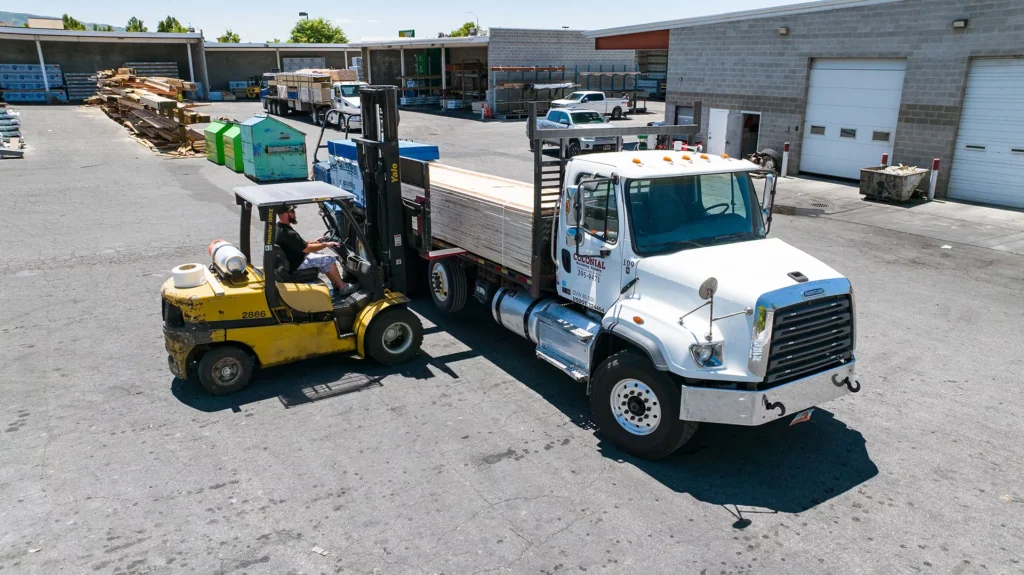
- Whether you need pickup or delivery.
For a deck, also ask about compatible fasteners and connectors. Our Lumber department carries hardware and decking materials, and our Paint department can help with finish options. Follow the applicable product instructions for compatibility.
Get current treated-lumber pricing and delivery options
Lumber pricing changes. Use Colonial’s lumber quote request form for current pricing on your material list, or call 801-295-9471 to talk through what you need.
Homeowners and contractors can request small orders or larger packages. Our Utah lumber delivery guide explains scheduling, jobsite access, unloading, and delivery charges. For material counts from supplied plans, visit Estimating and Takeoffs.
Start with the project and the exposure. We will help you take the next step toward selecting the material and getting a quote.
Technical references
For product-specific guidance, see YellaWood’s treated-lumber FAQs, ProWood’s treatment applications, and Viance’s treated-wood FAQs. These explain general principles; they do not identify the brand or treatment of a particular board in Colonial’s inventory. Confirm the end tag and instructions for the product you purchase.